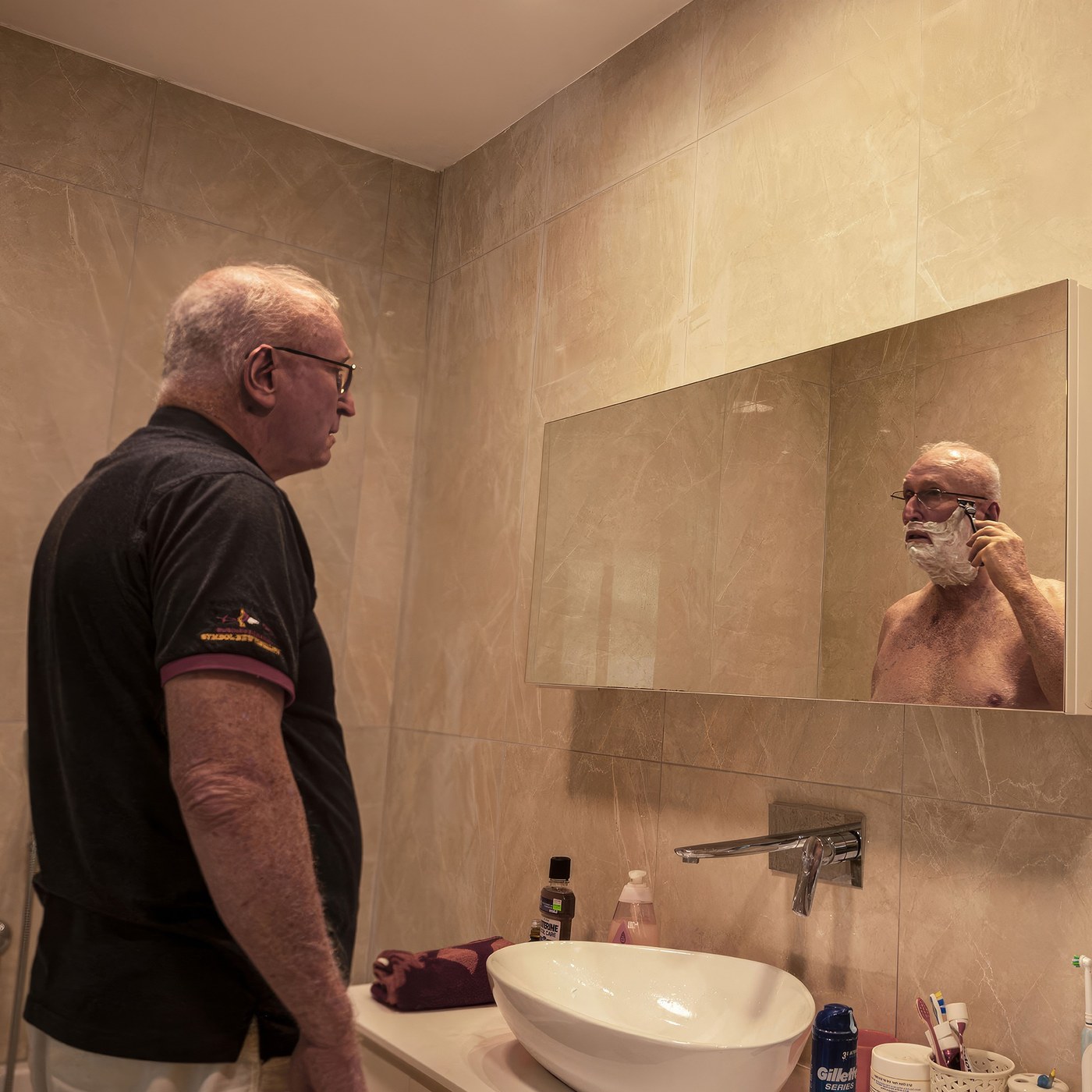
In the image titled "Things you can see from here," the protagonist stands in a bathroom, gazing at his reflection in a mirror while observing himself shaving. The scene is split between the real figure, fully dressed in a black shirt, and the reflection of the same figure in the mirror, shirtless, with shaving cream on his face. The physical space is a simple, clean bathroom, with soft lighting casting a warm glow on the beige tiles that surround the sink. The countertop is minimal, with a few toiletries placed neatly, including a can of shaving cream and other grooming essentials.
Things You Can See From Here
Archival pigment print · 2023
1X Gallery — Awarded
Exhibited — Haifa; Global Art
Archival prints from $800 · editions of 7, 3 and 1
◆ Signed Certificate of Authenticity in every package
Reading the work
One of the key themes in “Things you can see from here” is self-reflection and identity. The split between the protagonist in the physical world and his reflected self invites viewers to consider the multifaceted nature of personal identity. The protagonist’s act of watching himself in the mirror hints at introspection, where the man outside the mirror could be observing his past or future self. This moment of watching oneself perform a simple, everyday task becomes a deeper metaphor for contemplating one’s life, choices, and the person one has become. Another theme is the passage of time and routine. The act of shaving is deeply rooted in routine, something that must be done daily or regularly. In this context, the image captures the way life is composed of these repetitive actions, each day reflecting the one before it. The dressing of the outside figure and the undressed one inside the mirror may also speak to the dichotomy of the public self versus the private self—what we show to the world versus what we keep hidden. The bathroom mirror serves as a literal and figurative boundary between two realities or two versions of the same person. It introduces the theme of parallel selves—the idea that a person can exist in multiple states at once, influenced by time, memory, or even emotion. The image plays with this sense of parallelism, asking the viewer to consider what it means to look at oneself, not just physically but on a deeper, existential level. The title “Things you can see from here” suggests that the act of looking at oneself in the mirror reveals more than just a reflection. It points toward inner vision and understanding, as though the protagonist is seeing aspects of himself from a unique perspective. It hints at the idea that the mirror allows for a different kind of sight, one that penetrates deeper into the self or even beyond the present moment. The muted colors and soft lighting contribute to the theme of introspection and contemplation. The setting is familiar and mundane, but the act of reflection transforms the ordinary into a moment of existential inquiry, where the protagonist silently questions his own identity and the passage of time.