In the image titled "The Cogwheels of Time," the protagonist, seen from behind, walks toward an enormous, intricately designed clock embedded within a vast array of gears and cogwheels. The figure, dressed in a dark suit, appears small and contemplative against the massive machinery of time that stretches out before him. The clock's face is aged, with Roman numerals and weathered hands, evoking a sense of the passage of time and history. The surrounding cogwheels are elaborate, their interlocking teeth and metallic textures giving the impression of a grand, complex mechanism that drives the universe.
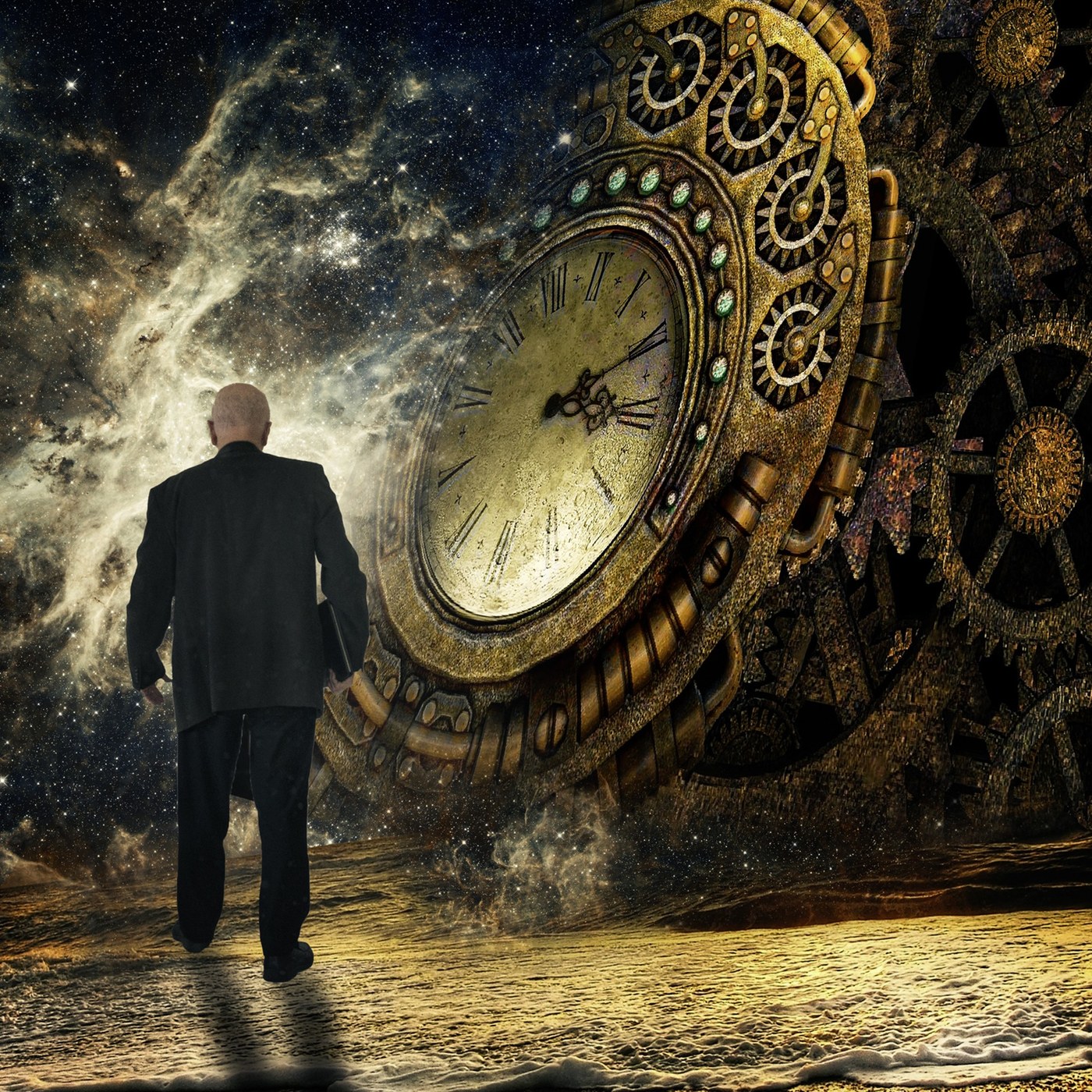
The Cog Wheels of Time
Archival pigment print · 2023
1X Gallery — Published
Living the Photo Artistic Life — Issue 64, June 2020
Archival prints from $800 · editions of 7, 3 and 1
◆ Signed Certificate of Authenticity in every package
Reading the work
The central theme of “The Cogwheels of Time” is the unstoppable nature of time and its relationship with the human experience. The enormous clock, with its intricate gears and weathered face, symbolizes the grand machinery of time, a force that is both mechanical and eternal. The protagonist’s journey toward the clock suggests an introspective confrontation with time itself—perhaps a reflection on aging, mortality, and the passage of life. The scale of the clock and cogwheels emphasizes how small and vulnerable the individual is when faced with the immensity of time. The blending of cosmic imagery with mechanical elements introduces the theme of time as a universal and cosmic force. The swirling nebula suggests that time is not only something experienced on a personal level but also a fundamental part of the universe’s workings. The cosmic background reinforces the idea that time extends far beyond human understanding, intertwining with the mysteries of the universe. Another key theme in this image is the relationship between order and chaos. The clock and cogwheels represent the structured, orderly nature of time, where each moment follows the next with precision. However, the vast, swirling cosmos introduces an element of chaos or mystery, suggesting that while time may appear mechanical, there is an underlying unpredictability to it. The image invites reflection on the balance between the predictable passage of time and the unknown forces that shape it. The journey of the protagonist also touches on themes of personal reflection and existentialism. The figure’s movement toward the clock suggests a journey toward understanding time, aging, or one’s own mortality. The smallness of the figure compared to the immense clock underscores the feeling of being dwarfed by time’s vastness, yet the protagonist walks steadily toward it, implying an acceptance or desire to engage with these profound forces. Overall, “The Cogwheels of Time” presents a vivid meditation on the unstoppable and universal nature of time, framed within a surreal, mechanical cosmos that combines personal reflection with cosmic order.