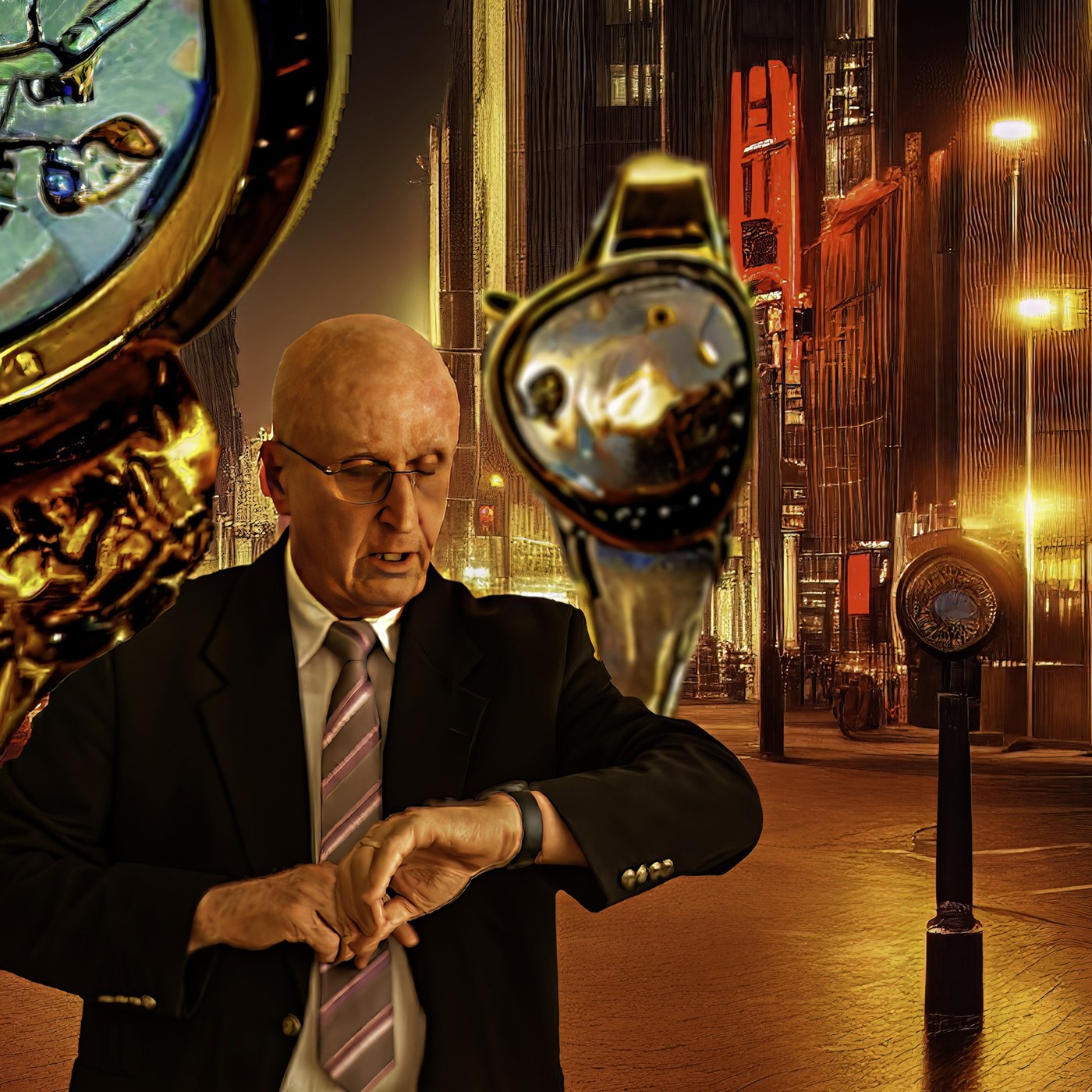
In the image titled "Fluid Time," the protagonist stands in an urban street at night, glancing down at his wristwatch with a look of concern or frustration. The setting is a dimly lit cityscape, with warm streetlights casting a soft glow over the cobblestone street. A large, vintage clock tower dominates the background, its face illuminated against the twilight. The urban environment is rendered in shades of orange and gold, enhancing the nostalgic atmosphere of the scene.
Fluid Time
Archival pigment print · 2022
1X Gallery — Published
Archival prints from $800 · editions of 7, 3 and 1
◆ Signed Certificate of Authenticity in every package
Reading the work
The primary theme in “Fluid Time” is the fluidity and subjectivity of time, illustrated through the presence of the warped, melting clocks. These clocks suggest that time is not a rigid, unchanging force but rather something that bends and warps depending on perception. The protagonist’s focus on his wristwatch, juxtaposed against the surreal clocks floating around him, highlights the tension between humanity’s attempt to measure and control time versus time’s natural, fluid nature. The image evokes feelings of frustration or anxiety related to the passage of time, a theme that may reflect personal concerns about aging, mortality, or the fleeting nature of life. Another theme is the contrast between time as experienced and time as measured. The clock tower in the background, standing tall and unmoving, represents structured time—the traditional, societal construct that governs daily life. In contrast, the melting clocks symbolize personal time, which can stretch, compress, or distort depending on circumstances, emotions, or memories. This theme touches on the existential idea that while society demands strict adherence to time, personal experience of time is far more fluid and subjective. The figure walking away in the background adds a layer of introspection, suggesting that some individuals are unaware or indifferent to the passage of time. In contrast, the protagonist’s preoccupation with his wristwatch implies a sense of urgency or anxiety about time running out, reinforcing themes of personal reflection on the unstoppable march of time and the impact it has on one’s life. The cityscape setting introduces the theme of modernity and the pressure that contemporary life places on the individual to keep up with time. The urban environment, with its glowing lights and towering clock, symbolizes the societal structures that enforce strict timekeeping, deadlines, and schedules. Against this backdrop, the melting clocks serve as a counterpoint, symbolizing the personal, emotional side of time that often defies these rigid structures. In “Fluid Time,” the clash between the personal and societal views of time is palpable, creating a visual narrative that explores both the anxiety and the surreal nature of how time is experienced.