In the surreal image titled "Laundry Day," the protagonist finds himself trapped inside a washing machine, peering out from behind the circular glass door. His expression is one of distress, as if screaming underwater, bubbles rising around him. The distorted face, partially submerged in water, is pressed against the glass, evoking a sense of claustrophobia and entrapment. The washing machine, with its bright white exterior and mechanical dials, is a standard household appliance, but the human presence inside it transforms this everyday object into a scene of absurdity and discomfort.
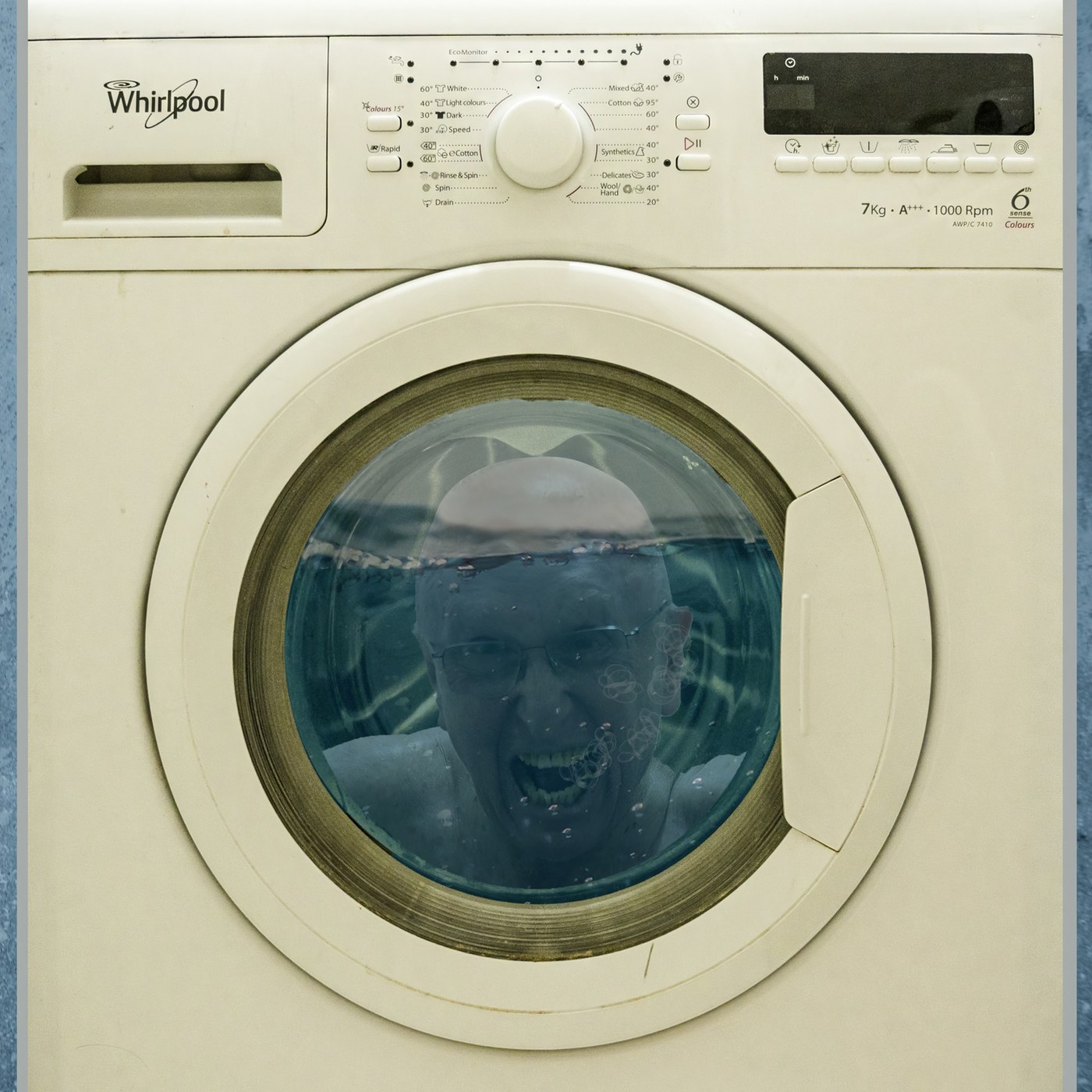
Laundry Day
Archival pigment print · 2023
1X Gallery — Published
Exhibited — Global Art
Archival prints from $800 · editions of 7, 3 and 1
◆ Signed Certificate of Authenticity in every package
Reading the work
One of the key themes in “Laundry Day” is entrapment within the mundane. The washing machine, an everyday object associated with domestic chores and routine, becomes a symbol of confinement. The protagonist’s distress and entrapment within this ordinary appliance may represent feelings of being overwhelmed or consumed by the repetitive cycles of modern life, where routine tasks take on oppressive qualities. The image can be seen as a metaphor for how mundane activities or societal expectations can trap individuals, leading to feelings of helplessness or frustration. Another important theme is absurdity and the surreal transformation of the familiar. By placing the protagonist inside a washing machine, the image creates an absurd scenario, turning an everyday object into something nightmarish. The absurdity of the situation adds a layer of dark humor, suggesting that even the most familiar aspects of life can become sources of existential reflection or discomfort when viewed through a surrealist lens. The water inside the machine, paired with the protagonist’s distressed expression, hints at themes of drowning or suffocation, both literally and metaphorically. The washing machine’s constant, unrelenting cycle mirrors the feeling of being trapped in an endless loop, unable to break free from repetitive tasks or expectations. The protagonist’s underwater state may symbolize a sense of losing control or being submerged by external pressures, struggling to stay afloat in the relentless wash of daily responsibilities. Lastly, there’s a commentary on modernity and mechanization, where humans are increasingly at the mercy of machines and automated processes. The washing machine, a tool of convenience, is now the cause of the protagonist’s distress, symbolizing how reliance on modern technology can sometimes lead to a loss of agency or personal control.