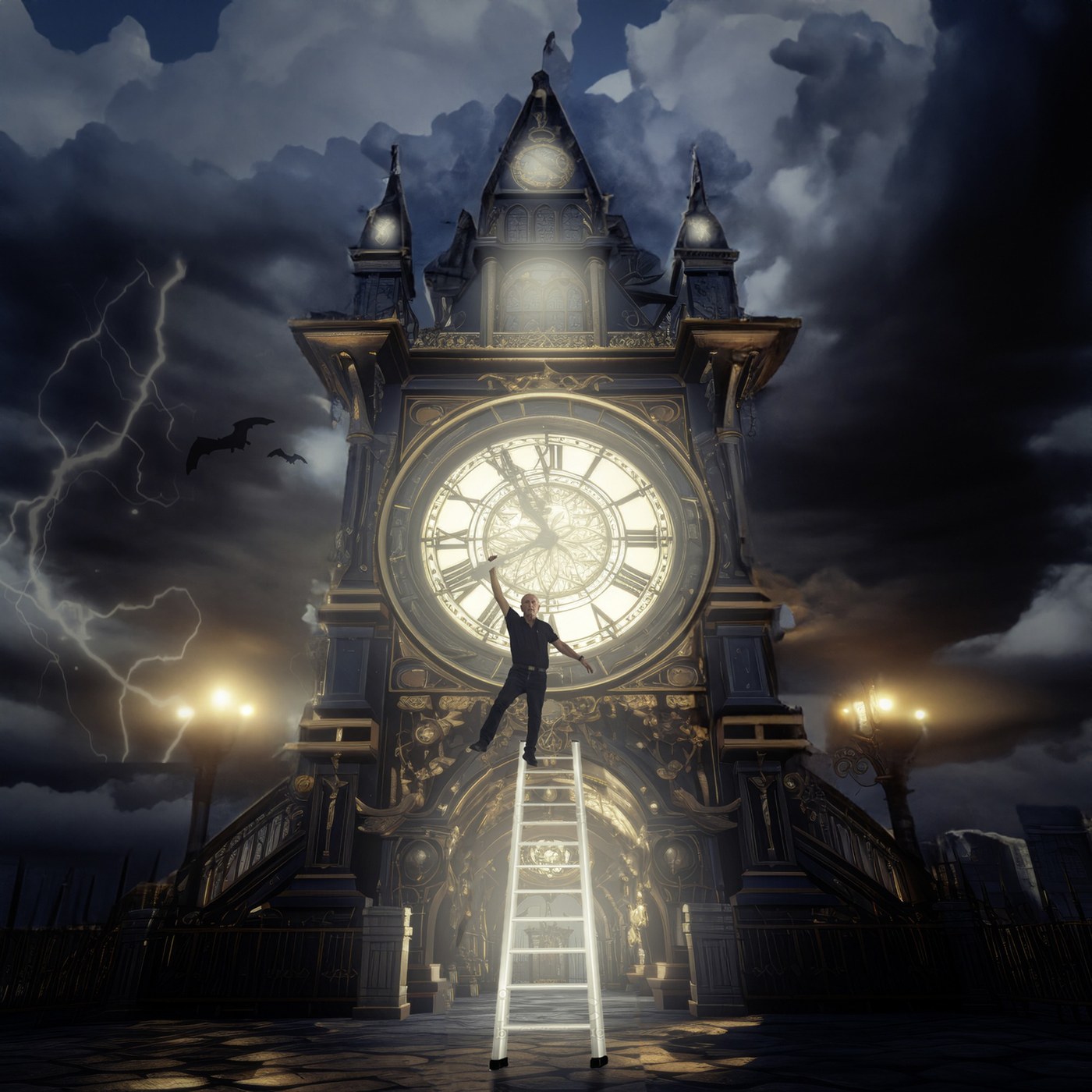
"The Man Who Stopped Time" portrays a lone figure standing triumphantly atop a ladder in front of an enormous and ornately designed clock tower. The clock, bathed in dramatic light, dominates the scene, casting an ethereal glow amidst dark and stormy skies. Lightning bolts strike in the distance, and bats flutter in the ominous atmosphere, enhancing the surrealism of the moment. The protagonist, seemingly frozen in time, reaches out as if claiming control over the massive clock, symbolically halting its movement. The lighting creates a mystical aura, emphasizing the interplay between man and time, with storm clouds swirling in the background, reflecting the turbulent nature of time itself.
The Man Who Stopped Time
Archival pigment print · 2023
Archival prints from $800 · editions of 7, 3 and 1
◆ Signed Certificate of Authenticity in every package
Reading the work
In his image, the protagonist atop the ladder mirrors Doc Brown’s position at the top of the clock tower, as both figures attempt to wrestle with the mechanisms of time. However, while the movie version plays with the excitement of achieving an extraordinary goal (sending Marty back to the future), his image amplifies the existential struggle, framing the protagonist as someone trying to halt or control time altogether, perhaps in a more personal and introspective manner. The ladder, clock, and stormy backdrop in both scenes amplify the sense of urgency and defiance. Yet, his image leans towards a darker, more surrealistic vision with storm clouds, lightning, and bats creating an ominous atmosphere—almost as if to suggest that the act of stopping time comes with consequences. The reference to “Back to the Future” connects the image to the pop culture narrative of time travel, altering fate, and the human desire to master time. However, his work takes it a step further by presenting time not merely as a dimension to navigate but as an omnipotent force to be stopped, or at least challenged. While “Back to the Future” emphasizes hope and scientific triumph, his portrayal feels more introspective, hinting at the futility of controlling time—time, in the end, stands undefeated.