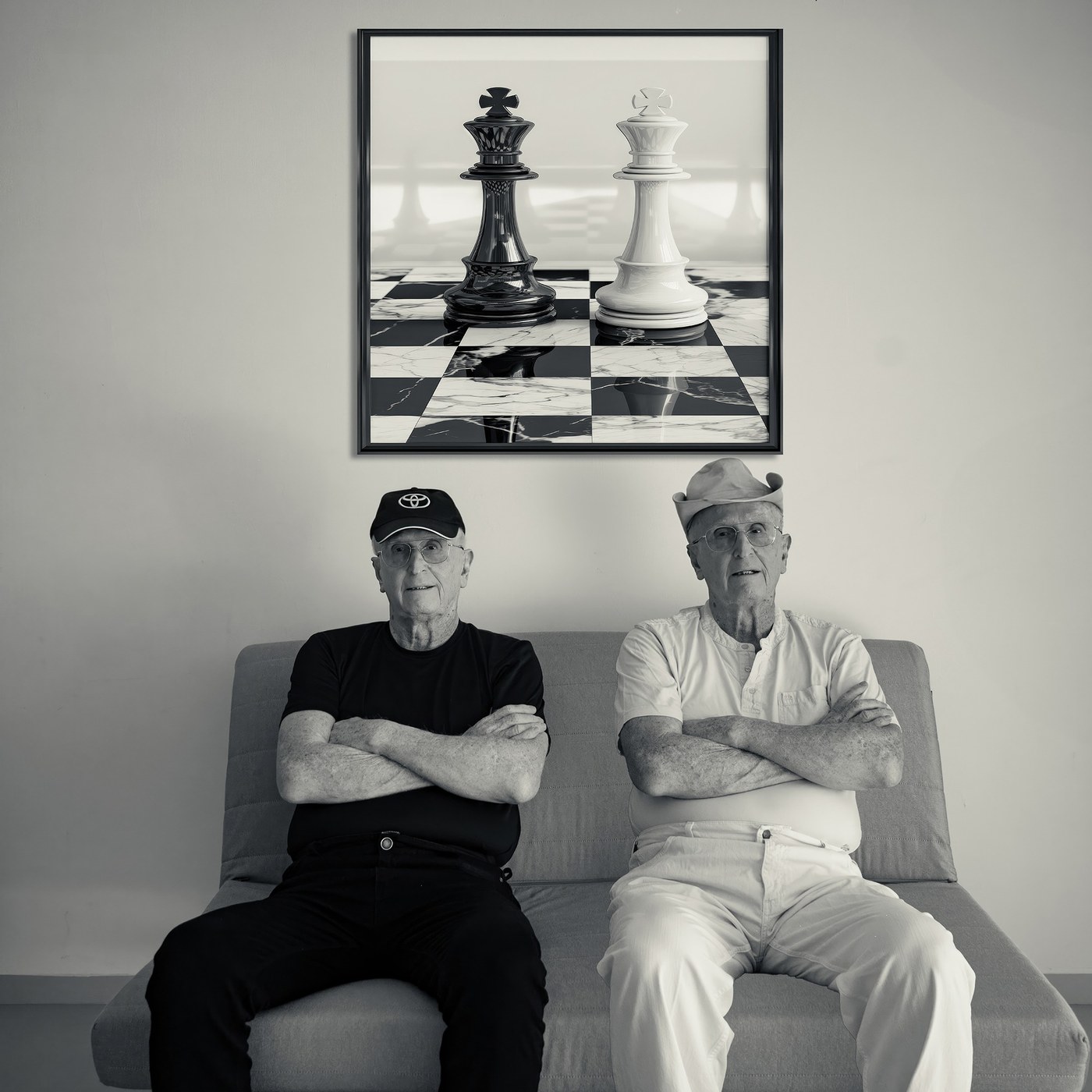
In the image titled "Black & White," two versions of the protagonist sit side by side on a simple couch, their arms folded across their chests in a posture of contemplation or perhaps confrontation. The image is divided not only by the physical separation between the two figures but also by their contrasting clothing: one dressed in a white shirt and light-colored pants, the other in a black shirt and dark pants. The title "Black & White" refers not only to their contrasting attire but also evokes a broader thematic opposition between light and dark, or duality in general.
Black & White
Archival pigment print · 2023
1X Gallery — Published
Exhibited — Haifa; Global Art
Archival prints from $800 · editions of 7, 3 and 1
◆ Signed Certificate of Authenticity in every package
Reading the work
The primary theme in “Black & White” is duality and internal conflict. The two figures represent different aspects of the same person, divided not only by their clothing but also by their demeanor and presence. The contrast between black and white hints at opposing forces within the individual—perhaps the rational versus the emotional self, or two different stages in life grappling with one another. The arms crossed on both figures suggest a defensive or closed-off posture, as though neither side is willing to yield or compromise. Another theme is contemplation and strategy, as symbolized by the chessboard in the background. The chess game, with its strategic complexity, mirrors the internal game or negotiation taking place between the two figures. The white queen and black king on the chessboard evoke the idea of balance, power dynamics, and decision-making, suggesting that the figures in the image are engaged in a psychological game of strategy, determining which aspect of the self will take control or win the metaphorical game. The black-and-white color scheme introduces the theme of morality or ethical duality. In many cultural and artistic traditions, black and white represent good versus evil, light versus darkness, or right versus wrong. In this image, the stark contrast between the two figures invites the viewer to contemplate the moral or existential tension within the individual—whether this division is between different values, choices, or perspectives. Lastly, the theme of self-reflection is present. The image suggests that the protagonist is engaged in a quiet moment of introspection, confronting different facets of his identity. The visual repetition of the same person seated side by side encourages the viewer to think about the multiplicity within each individual and the internal dialogues that shape one’s sense of self.