In the image titled "Patryioshka," a surreal visual unfolds, reminiscent of the traditional Russian Matryoshka dolls. The protagonist is seen emerging from the broken shell of an egg, but what makes this image distinct is the infinite recursive nature of the scene. Within the egg, the protagonist can be seen holding another, smaller egg containing a miniature version of himself. This pattern repeats multiple times, each time with the protagonist in the same position, seemingly guarding and observing the next version of himself as it hatches.
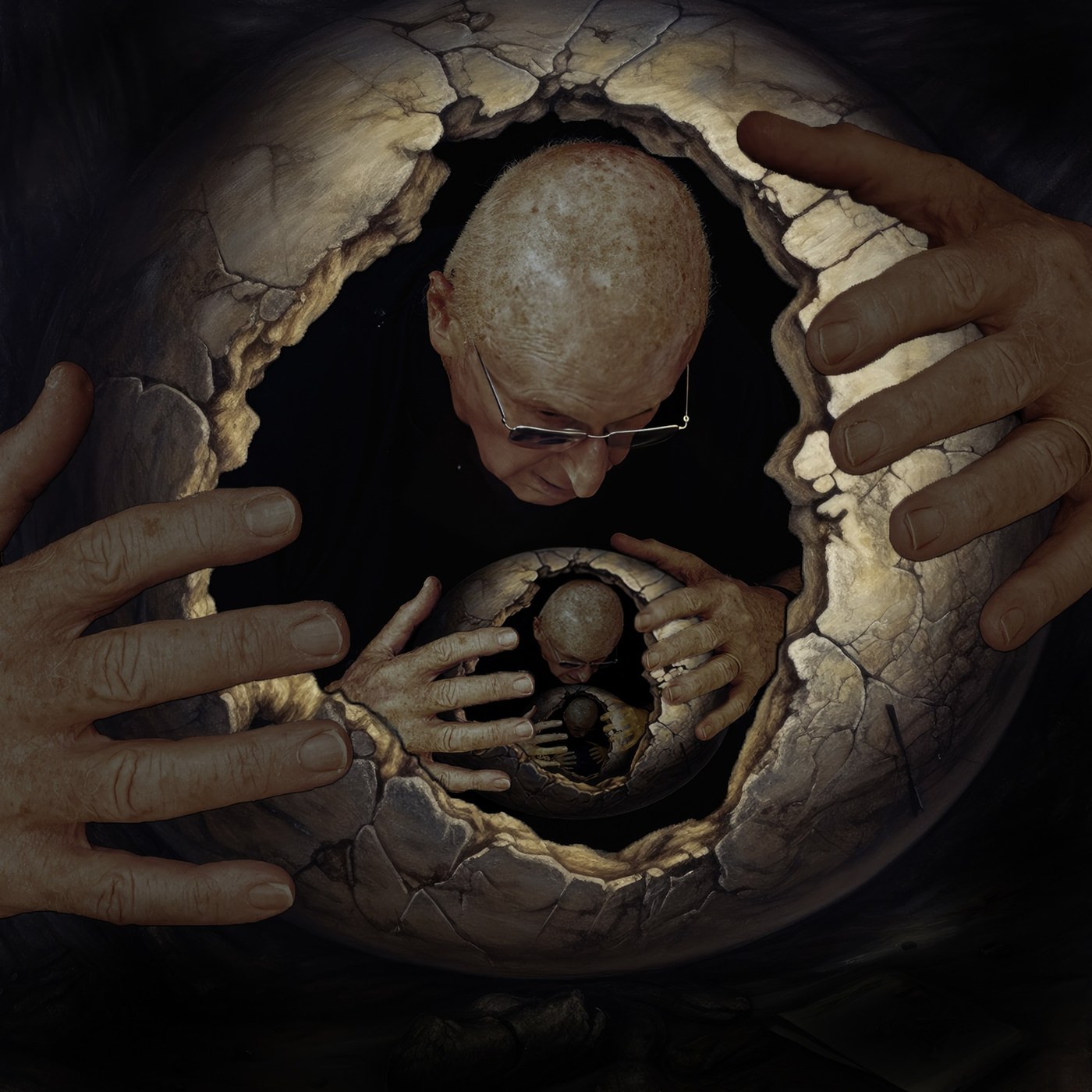
Patryioshka
Archival pigment print · 2023
1X Gallery — Published
Living the Photo Artistic Life — Issue 102, August 2023
Archival prints from $800 · editions of 7, 3 and 1
◆ Signed Certificate of Authenticity in every package
Reading the work
The central theme of “Patryioshka” is infinite recursion and self-reflection. The protagonist’s presence within multiple layers of eggs, each containing a smaller version of himself, symbolizes the concept of endless introspection. Like the Russian Matryoshka doll, where each layer reveals another within, this image reflects the layers of the self, where deeper understanding or realization might reveal more questions or further layers to explore. The act of hatching represents not just a physical birth, but also a metaphorical rebirth, suggesting that self-exploration and personal growth are continuous processes. Another theme is the fragility of life and identity. The eggshell, a symbol of new beginnings and protection, is cracked open, revealing the protagonist inside. However, the cracks also represent vulnerability, reminding us that self-discovery often requires breaking through the fragile layers that we construct around ourselves. The repeated hatching reinforces the idea that this process happens continuously throughout one’s life. The hands around the egg may symbolize external forces—whether societal, familial, or internal—that nurture, protect, or manipulate this process of self-formation. The theme of cyclical time is also explored in the recursive imagery. The endless repetition of the protagonist hatching from within himself suggests that time is not linear but rather cyclical. Each version of the protagonist emerges as a new iteration, yet he is bound within the same cycle. This challenges the viewer to consider how much of life is repeated, and how our past selves influence the present and future versions of us. Finally, the theme of control and autonomy is subtly present. The large hands encircling the eggshell hint at an external force or consciousness overseeing the protagonist’s emergence. While the protagonist actively holds the smaller version of himself, it raises the question of how much control we truly have over our own development. The image suggests a tension between autonomy and the influence of larger forces that shape who we are and who we become.