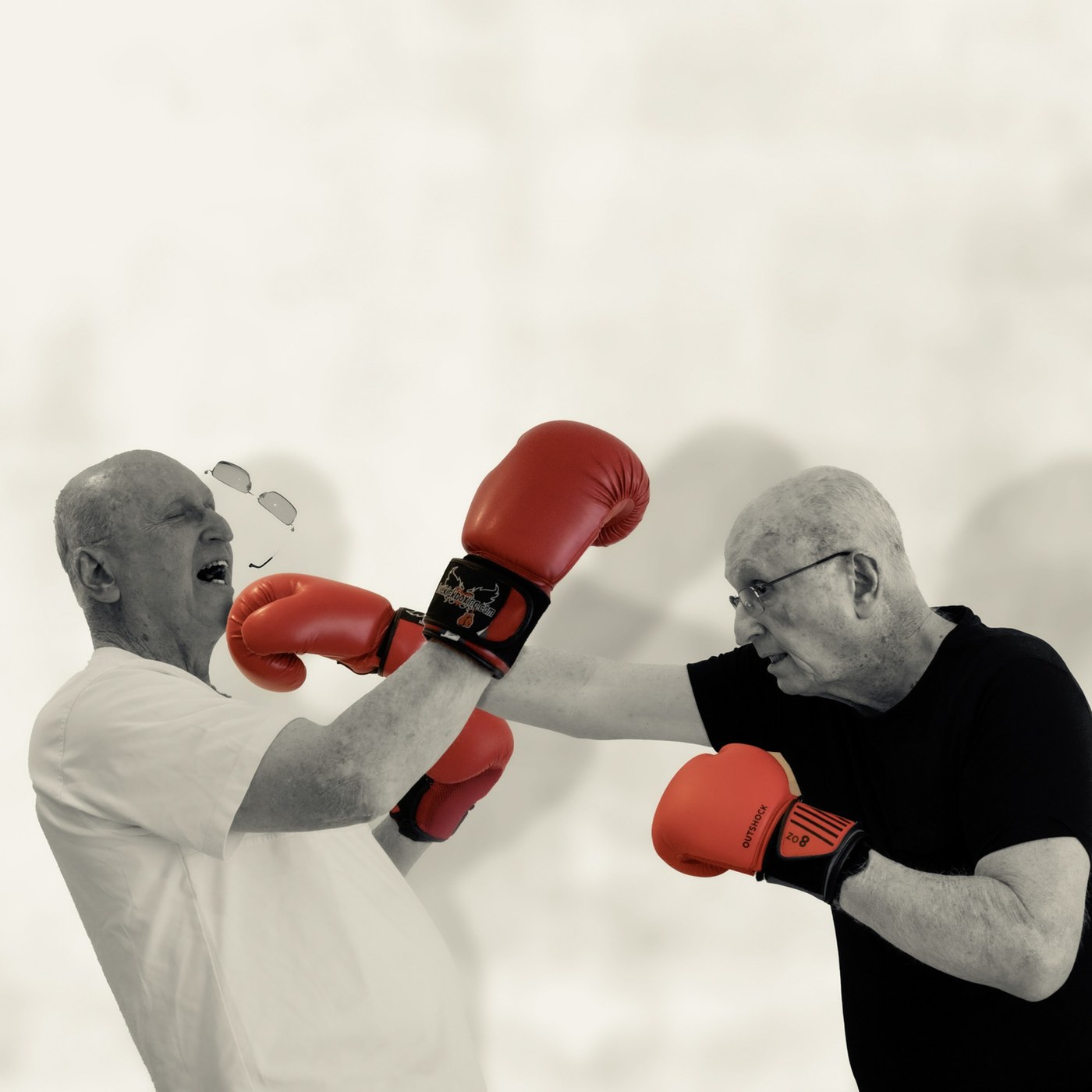
In the image titled "Inner Conflict," two versions of the protagonist face off in a boxing match. The figure on the left, dressed in a white shirt, is caught mid-reaction as he receives a punch to the face from the second figure on the right, who is dressed in a black shirt. Both are wearing red boxing gloves, and the intensity of the punch is evident, as the glasses of the left-hand figure have been knocked off and are captured in mid-air, just above his head. The scene is set against a plain, neutral background, allowing the focus to remain entirely on the confrontation between the two figures.
Inner Conflict
Archival pigment print · 2024
1X Gallery — Published
Exhibited — Haifa
Archival prints from $800 · editions of 7, 3 and 1
◆ Signed Certificate of Authenticity in every package
Reading the work
The most prominent theme in “Inner Conflict” is the idea of a personal, internal struggle. The two figures, representing different aspects of the same individual, are locked in a battle, symbolizing the tension between opposing forces within the self. The use of boxing, a sport that demands both physical strength and mental focus, further emphasizes the intense nature of this internal struggle. This image can be seen as a visual metaphor for the battles we face within ourselves—whether it’s between different emotions, decisions, or aspects of one’s identity. The contrasting outfits—the white shirt and the black shirt—might represent the duality of the self. One side could symbolize vulnerability, passivity, or innocence, while the other could represent strength, aggression, or control. The violent act of punching could be interpreted as an attempt to suppress, confront, or resolve these conflicting elements of the self. Another key theme is the exploration of aging and self-perception. The physical act of boxing suggests a fight for control, dominance, or reconciliation between past and present selves. The image invites the viewer to consider the complexity of inner conflict, particularly as one ages, where emotional and psychological battles may take on new dimensions. This scene captures a moment of intense self-reflection, making it both a powerful visual and emotional representation of internal conflict. The simplicity of the composition allows the theme of inner struggle to come to the forefront, creating a universal narrative that viewers can relate to on a personal level.