In the artwork titled "Ants," a monumental, weathered stone head—representing the protagonist, as in all his works—emerges partially buried in the vast, barren desert landscape. The head, bearing his likeness, is etched with time, its surface cracked and worn, as if it has been enduring the elements for centuries. Its expression is calm and stoic, conveying a sense of timelessness and endurance, yet also vulnerability to the slow erosion of time.
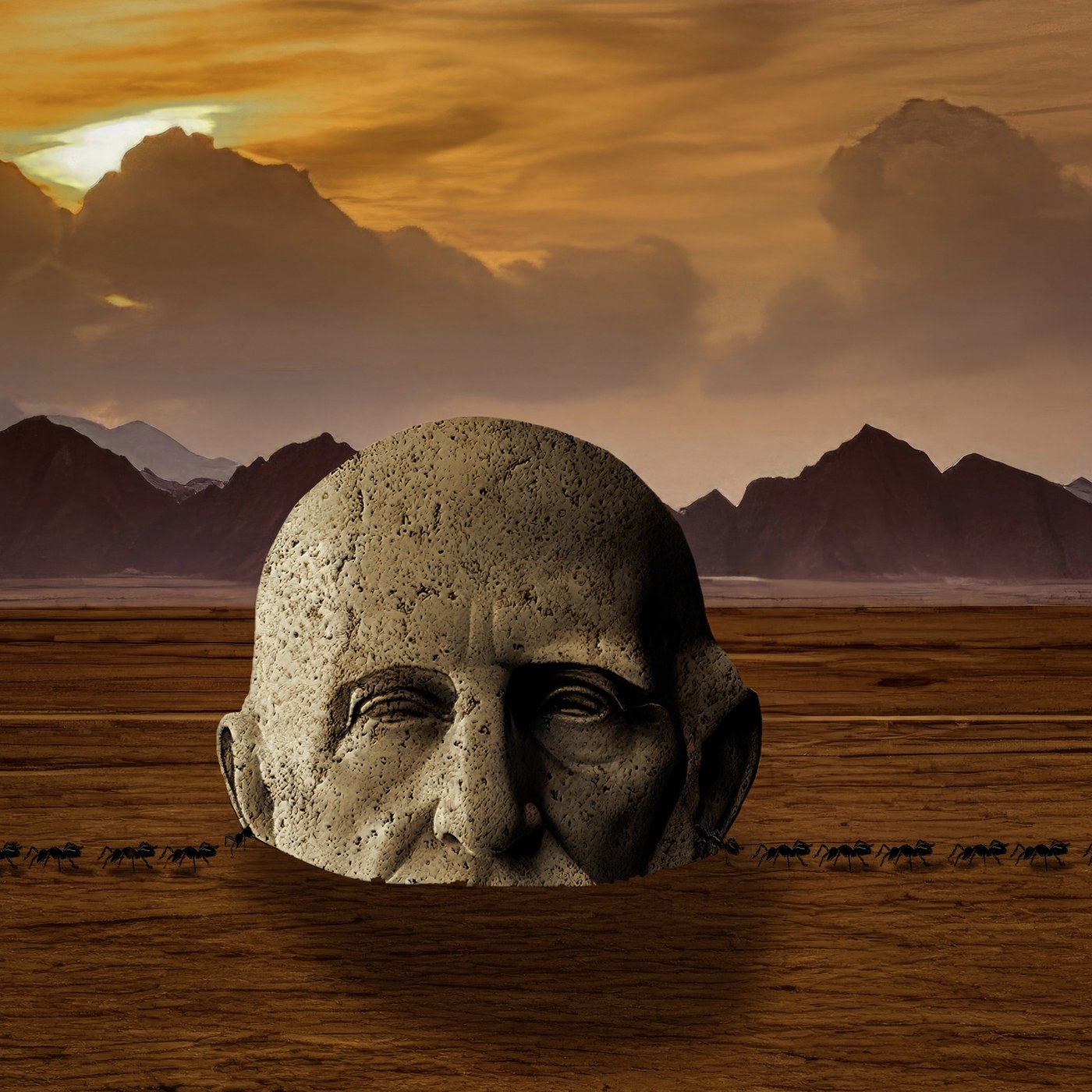
Ants
Archival pigment print · 2023
Living the Photo Artistic Life — Issue 94, December 2022
Archival prints from $800 · editions of 7, 3 and 1
◆ Signed Certificate of Authenticity in every package
Reading the work
A dominant theme in “Ants” is the juxtaposition of the monumental with the minuscule, symbolizing the relentless passage of time and nature’s persistence. The colossal head, likely a representation of the self or humanity, is weathered and partially buried, evoking the fragility and impermanence of even the most imposing of creations. The ants, though small in comparison, symbolize the inevitability of decay and erosion. They represent the slow but constant forces of time that eventually wear down even the mightiest monuments, whether they be physical, like the stone head, or metaphorical, like memories or legacies. The head’s serene expression suggests a certain resignation or acceptance of its fate. It stands as a relic of something once grand, now succumbing to the desert and the tiny but persistent ants. The ants’ steady march could be seen as a metaphor for the small, everyday actions or forces that slowly accumulate, leading to larger consequences over time—whether that be the erosion of physical structures, the decline of human ambitions, or the eventual fate of all things mortal. Another key theme is the contrast between humanity’s sense of grandeur and nature’s enduring power. The head symbolizes human achievement, self-importance, or ego, while the ants symbolize the indifferent and ceaseless forces of nature that will ultimately reduce everything to dust. This tension between human ambition and nature’s indifference is amplified by the barren landscape and the warm, almost suffocating, light of the setting sun, suggesting an end or a decline. The use of the desert as a setting emphasizes themes of isolation and timelessness. Deserts are often symbolic of existential reflection, emptiness, or the passage of time. Here, the desert acts as a stage for the slow erosion of the once-powerful symbol of the head, while the ants, unperturbed, continue their journey. The title, “Ants,” focuses attention on these seemingly insignificant creatures, underscoring the idea that it is often the smallest forces that bring about the most significant changes.