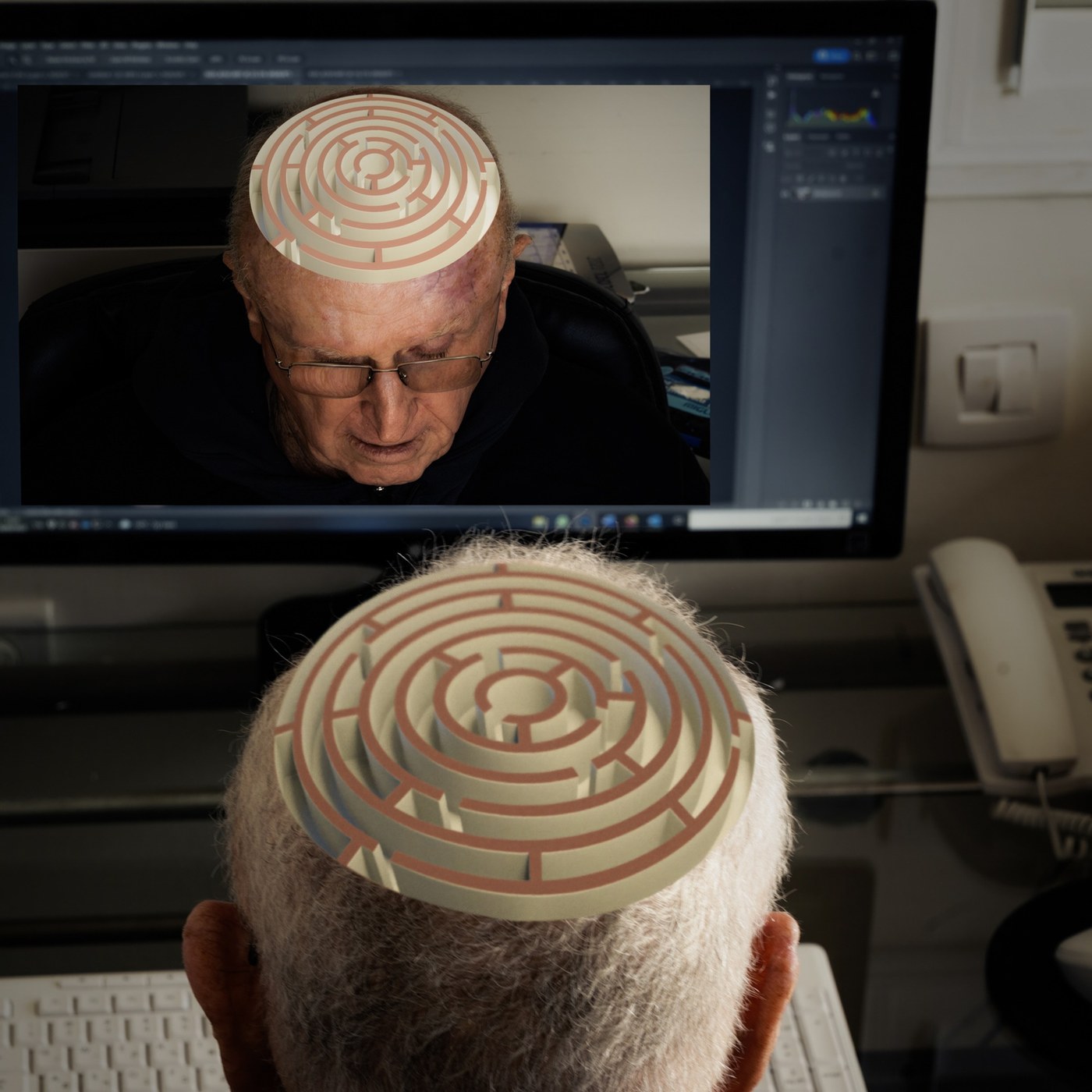
In "Amazing Mazes," the protagonist, once again depicting the artist, is seated in front of a computer screen, gazing down with an introspective expression. A maze is superimposed on top of the protagonist’s bald head, symbolizing the complexity of thought processes. Interestingly, the maze is present both on the protagonist's head and on the computer screen, as if reflected or duplicated in the digital space. The protagonist appears in both the real and virtual worlds, reinforcing the idea of the mind being explored, mapped, and analyzed.
Amazing Mazes
Archival pigment print · 2023
Archival prints from $800 · editions of 7, 3 and 1
◆ Signed Certificate of Authenticity in every package
Reading the work
A primary theme in “Amazing Mazes” is the complexity of the mind. The maze symbolizes the intricate paths of thought, memory, and cognition, portraying the mind as both a labyrinth and a challenge to navigate. This could reflect inner struggles, mental exploration, or simply the complexity involved in understanding oneself. The dual appearance of the maze, both physically on the protagonist’s head and on the screen, suggests that this complexity exists in both the physical and virtual realms, perhaps pointing toward a journey of self-reflection or identity in the age of digital technology. Self-reflection is another core theme in this image, underscored by the protagonist’s duplication in both the real world and the virtual world. This mirrors the introspective nature of self-exploration—where one sees themselves both in real life and reflected in a metaphorical or digital space. It represents an attempt to solve the puzzle of the self, using both modern tools (technology) and personal experience. The digital vs. the organic is subtly present in this image. The protagonist’s organic, physical body contrasts with the digital reflection on the computer screen. The maze’s representation in both the real world (on the head) and the digital world (on the screen) bridges these two spaces, suggesting the intertwining of human cognition and technology in contemporary life. It implies a search for solutions or understanding in both internal and external contexts, where the line between natural thought processes and computational thinking is blurred. Finally, the theme of identity and mental navigation is prominent. The maze can represent the protagonist’s ongoing journey to understand his identity, emotions, and life experiences. It suggests that navigating one’s mind or past can be challenging, with dead ends and circular paths. The layering of the maze on the protagonist’s head reflects the intricate nature of the self and the complexities involved in trying to piece together one’s thoughts, experiences, and future.