In The Game of Defeated Kings, the artist sits in a pensive posture, wearing a crown, contemplating a chessboard where both the black and white kings have been toppled. The crown on his head adds a symbolic layer to the scene, representing his dual role as both victor and vanquished in this ambiguous game. The toppled kings signify the end of the game where there is no winner, emphasizing a sense of stalemate or mutual defeat. The lighting and shadows create a subdued atmosphere, reinforcing the themes of loss and reflection
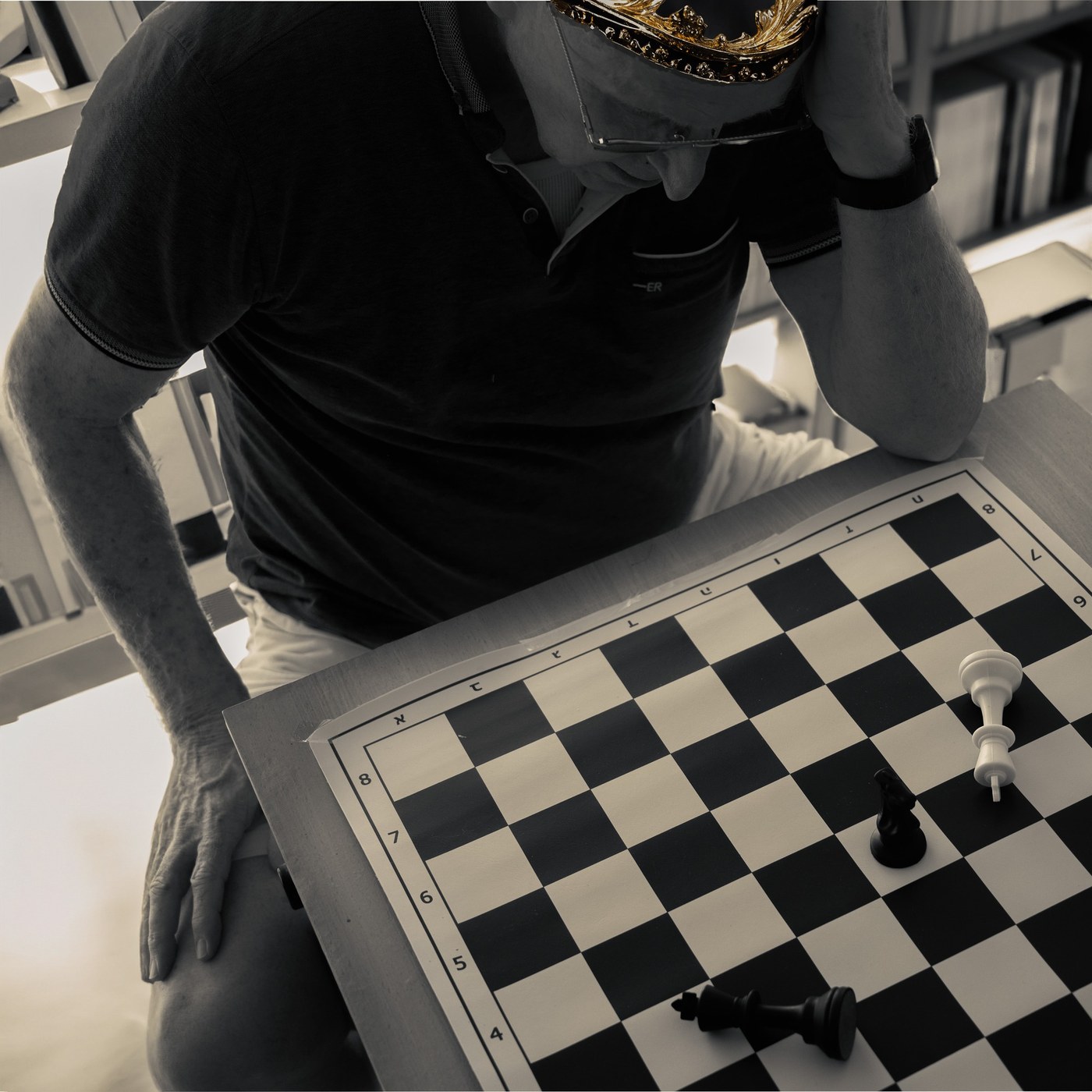
Game of Defeated Kings
Archival pigment print · 2023
Living the Photo Artistic Life — Issue 106, December 2023
Exhibited — Haifa; Global Art
Archival prints from $800 · editions of 7, 3 and 1
◆ Signed Certificate of Authenticity in every package
Reading the work
This image explores the themes of defeat, equality in loss, and introspection. The fact that both kings have fallen points to the idea that, in some situations, no one emerges victorious—suggesting the futility of conflict or competition. The crown remains on his head, perhaps implying that status, authority, or identity can persist even in moments of mutual defeat. The dual loss portrayed in the chess game could symbolize the balance of power or the realization that, despite strategic moves, all participants in life’s struggles may eventually face defeat. The fallen kings might represent the universal nature of downfall—where victory is elusive, and both sides can lose equally. This could also point to life’s endgame, where all humans, regardless of status or strength, meet the same fate. The image’s overall introspective quality draws attention to self-reflection on past battles, choices, and the consequences of those decisions, inviting the viewer to contemplate their own experiences of conflict, victory, and inevitable defeat. It underlines a stoic acceptance of the outcome, whatever it may be.