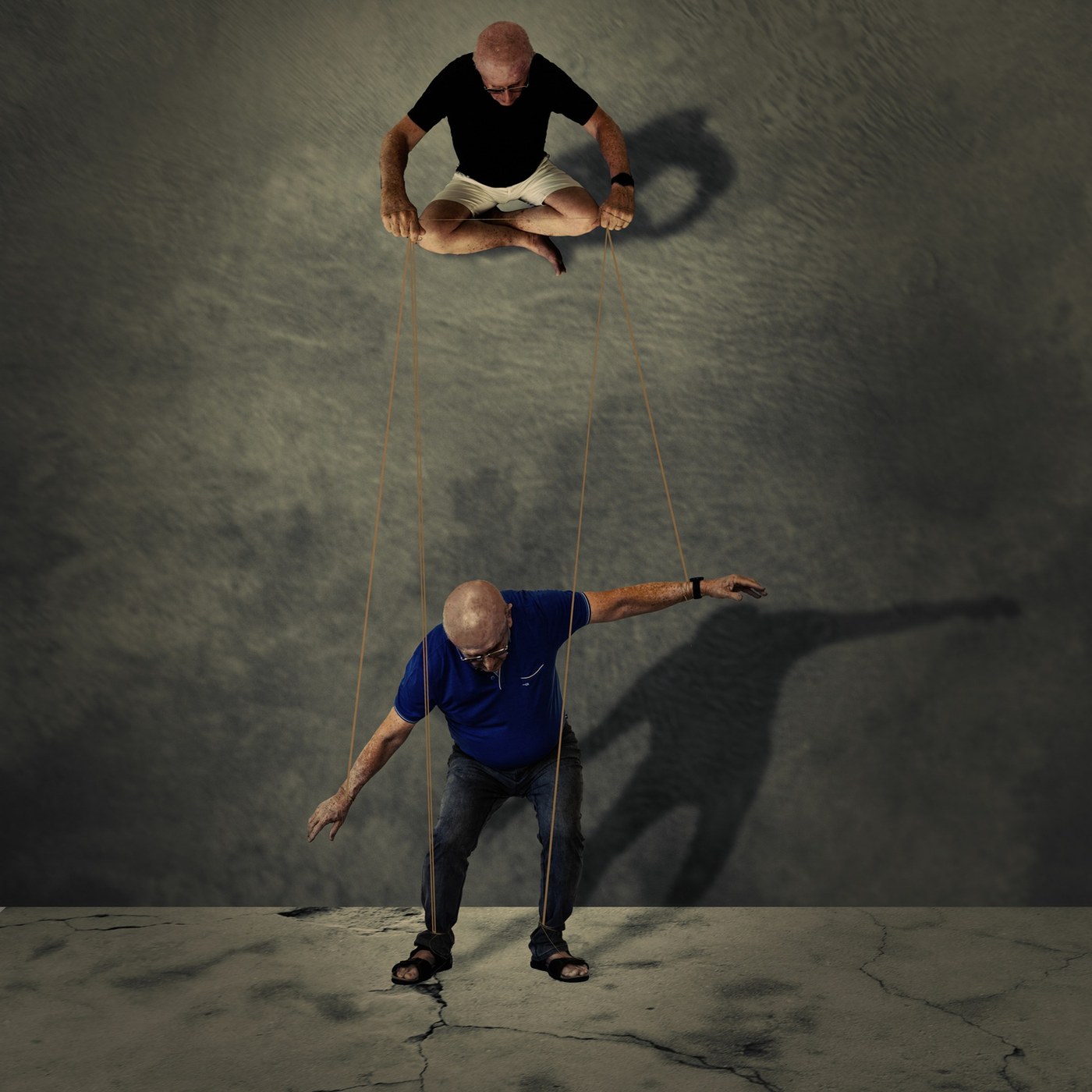
In the image titled "The Puppet Master," the protagonist is split into two versions of himself: one figure sits cross-legged above, manipulating the other figure below with strings like a puppet master controlling a marionette. The upper figure, dressed in black shorts and a t-shirt, is positioned in a calm, meditative posture, holding the strings that control the actions of the second figure. This second figure, standing below, appears slightly hunched and awkward, as though struggling to maintain balance or control over his own movements. The strings are taut, visibly linking the two figures, emphasizing the dynamic of control and influence.
The Puppet Master
Archival pigment print · 2023
Living the Photo Artistic Life — Issue 89, July 2022
Archival prints from $800 · editions of 7, 3 and 1
◆ Signed Certificate of Authenticity in every package
Reading the work
One of the key themes in “The Puppet Master” is the struggle for control, both externally and internally. The upper figure, acting as the puppet master, represents a force of control or influence, possibly suggesting a part of the self that dictates or manipulates actions and decisions. The lower figure, tethered by the strings, embodies the part of the self that is constrained, bound by external or internal forces, and unable to move freely. This tension between the two figures reflects the complexity of human experience, where one’s actions may feel controlled or influenced by factors beyond one’s conscious control. Another prominent theme is the duality of the self. The two figures represent different aspects of the same person—the one in control and the one being controlled. This may suggest an internal conflict between personal autonomy and the forces that govern or influence one’s life, whether those forces are psychological, societal, or existential. The image raises questions about free will, personal agency, and the extent to which individuals are in control of their own lives versus being manipulated by unseen forces. The cracked floor beneath the lower figure emphasizes the instability and vulnerability of the controlled figure. It symbolizes a fragile foundation, suggesting that when one is not fully in control, the ground beneath them becomes less stable, and they risk losing balance. This instability further enhances the theme of struggle and imbalance in the face of control. Additionally, the puppet master figure’s meditative posture suggests a paradox: while the upper figure appears calm and collected, his control over the lower figure creates strain and discomfort. This contrast might symbolize the difference between one’s perceived sense of control and the reality of how that control affects their life. The image invites reflection on the tension between self-control, external control, and the consequences of both.