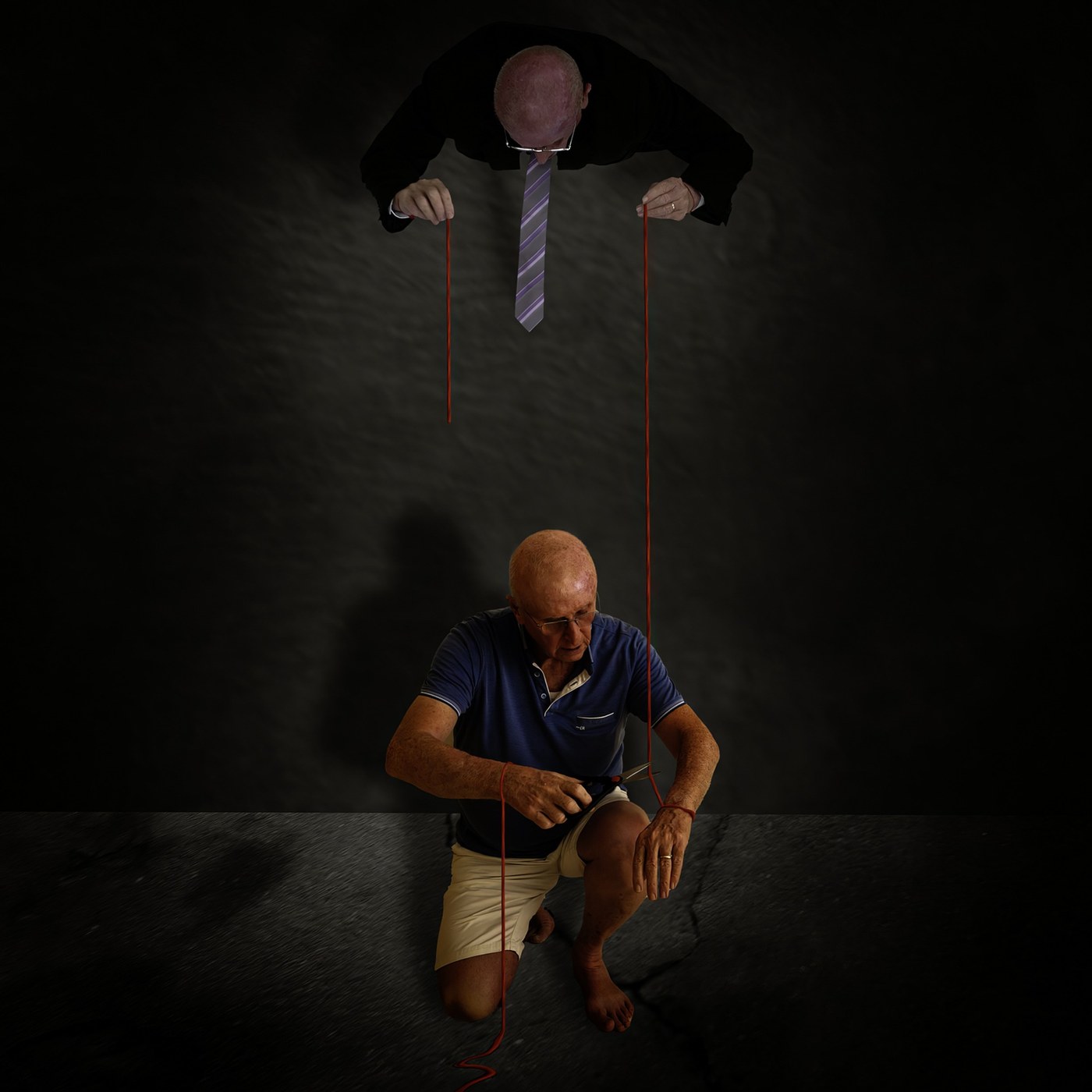
In the image titled "Liberation," the protagonist appears in two forms once again, echoing themes from the previous work "The Puppet Master." In this piece, the upper figure, dressed in a formal suit and tie, hovers above, holding red strings that connect him to the lower figure. The lower figure, kneeling on the ground, is dressed in casual clothes and barefoot. However, unlike the previous image, the lower figure is actively cutting one of the red strings with a small knife, symbolizing an act of release or rebellion against the control imposed by the upper figure.
Liberation
Archival pigment print · 2023
Archival prints from $800 · editions of 7, 3 and 1
◆ Signed Certificate of Authenticity in every package
Reading the work
The primary theme in “Liberation” is the act of reclaiming autonomy and the struggle for self-determination. The lower figure’s action of cutting the string is a direct metaphor for breaking free from control, manipulation, or oppressive influences. The red string, often symbolic of fate or control in mythologies, here becomes a tether that the protagonist chooses to sever, representing liberation from forces—whether psychological, societal, or internal—that have dictated his path. This theme of autonomy is contrasted by the presence of the upper figure, who remains calm, seemingly unaware of the act of rebellion below. The upper figure still holds the remaining strings, symbolizing that complete liberation may not be instantaneous or total. The ongoing presence of control suggests that the journey to full freedom is gradual, with remaining constraints still to be overcome. Another theme is personal transformation. The act of cutting the string represents a moment of decisive action, where the protagonist shifts from passive submission to active change. The knife symbolizes the tool of empowerment, and the simple act of severing a string speaks volumes about the personal power that lies in small, deliberate actions. The cracks in the floor below the lower figure suggest instability, perhaps reflecting the uncertainty or risk involved in breaking free from control. The cracks may also symbolize the breaking of old patterns or structures, making way for new forms of independence and self-direction. The contrast between the upper and lower figures represents a duality of self—the controlled and the controller. However, unlike in “The Puppet Master,” where the lower self seemed powerless, here the lower self takes steps toward emancipation, signaling hope, progress, and the possibility of self-liberation.