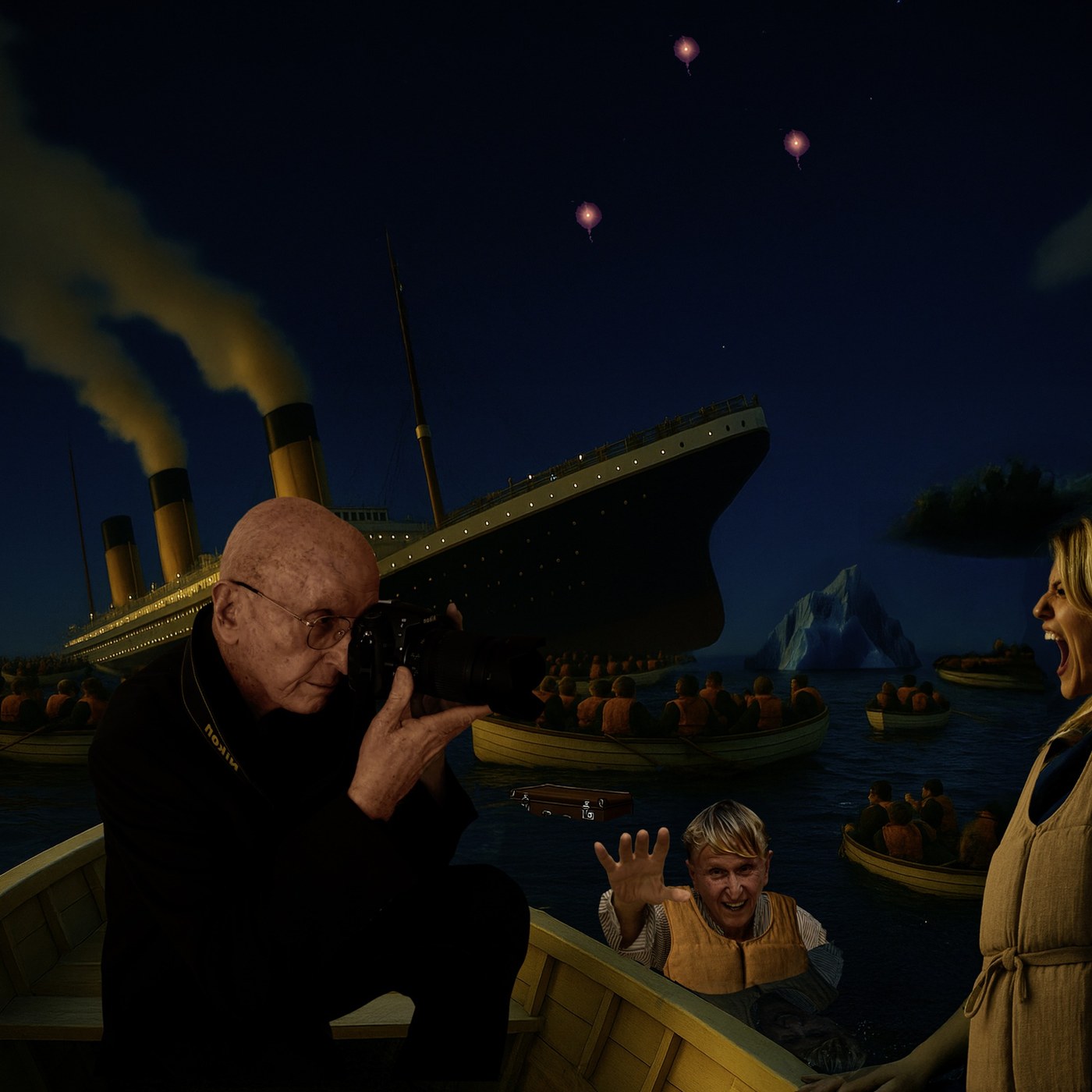
The North Atlantic, April 1912 image places the artist at the heart of the Titanic disaster, fractured into multiple selves: one drowning in the icy water, another calmly photographing the scene from a lifeboat. A third figure — a woman in a life vest — screams in panic beside him. With surreal clarity and vintage aesthetics, the image reimagines this iconic tragedy as a moment of quiet absurdity, where presence, detachment, and self-duplication turn catastrophe into a darkly intimate tableau.
Behind the image
April 15, 1912, North Atlantic, southeast of Newfoundland
Disasters photograph well.
The trouble is, they pay no attention to a photographer’s schedule. When the Titanic sank, there was no photographer waiting for her in the middle of the ocean. So I sent my time traveler to find a seat in one of the lifeboats. I based the life jackets worn by the people in the boats on photographs of life jackets from that period.
One end of the ship rises above the water. It’s hard to believe that in another moment this ship, the one people thought would never sink, will disappear. A woman beside me screams. Her partner is already in the freezing water, reaching for the boat. He happens to be me, too.
I called the picture “The Last Frame” because this is the last moment when the Titanic is still visible above the surface. To get the next frames, we had to wait 73 years and go down nearly four kilometers.
I think the man in the water would have preferred me to put down the camera for a moment and reach out to him. But I preferred the last frame. And the man in the water? That’s me.