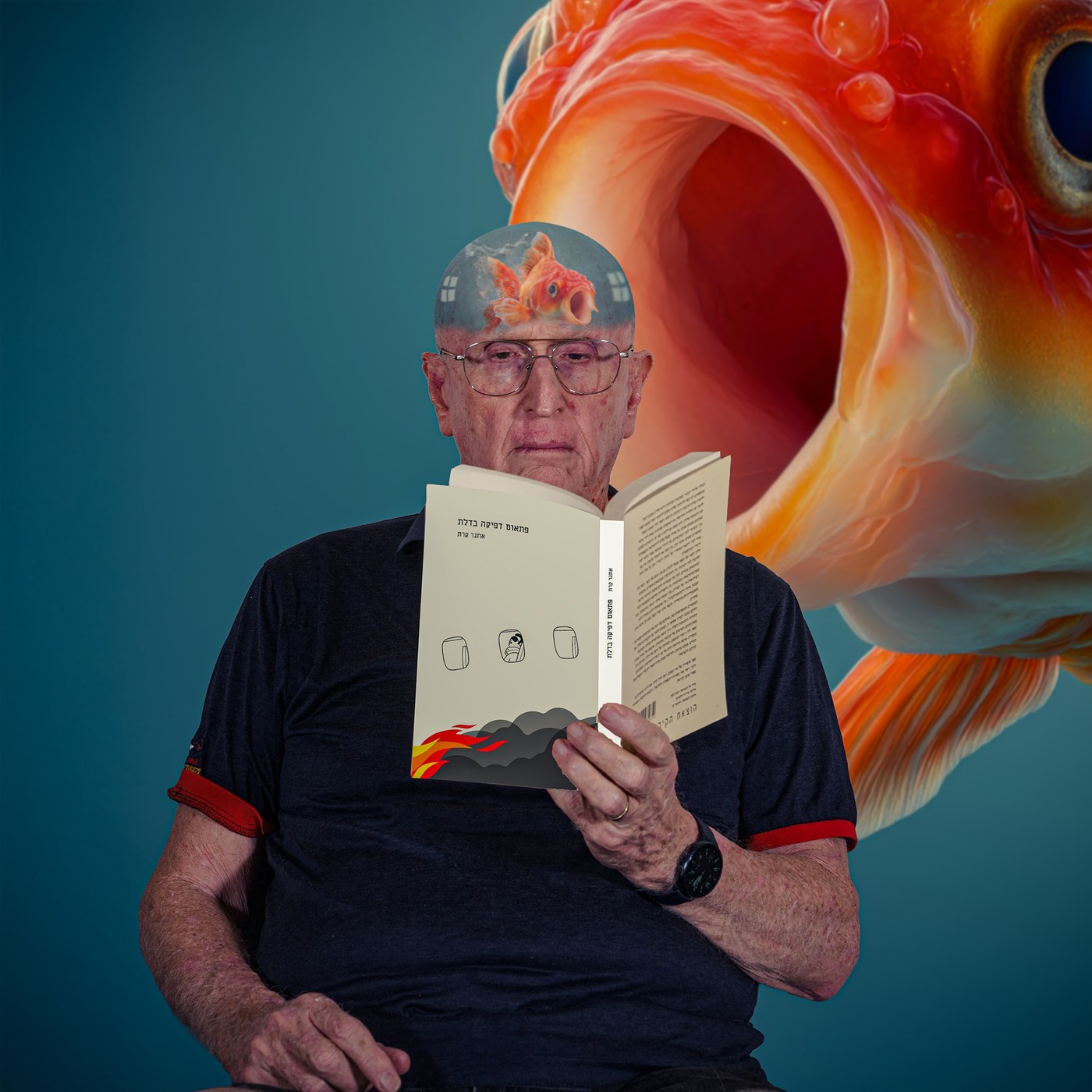
In the Goldfish an elderly man sits absorbed in reading a book, while a giant goldfish looms behind him. A surreal twist reveals another goldfish swimming inside his transparent head, as if his thoughts are alive and echoing the story in his hands.
Behind the image
When I read Etgar Keret’s story “The Goldfish,” I was drawn to the difficult choice facing its protagonist: whether to save a stranger at the cost of losing the one who may be his only friend.
The story reminded me of the moral dilemma of a train driver whose brakes have failed, forcing him to choose between two tracks, each with people on it. The question becomes even harder when the people on the track are dear to us.
Not long ago, my nine-year-old granddaughter asked me what I would do if she, her brother and her sister were on one track, and an enormous sum of money was on the other. I told her that no amount of money in the world could make me do anything to harm them. She smiled, and I think my answer put her mind at ease.
In my image, I am absorbed in Keret’s story, trying to understand what I would do if I faced such a choice. I am so lost in thought that I fail to notice an enormous goldfish approaching from behind. Before I have time to make even a single wish, it devours me. Because fish have no moral dilemmas.
And that is despite my not being on any railway track. Apparently, it is sometimes worth looking up from a book.