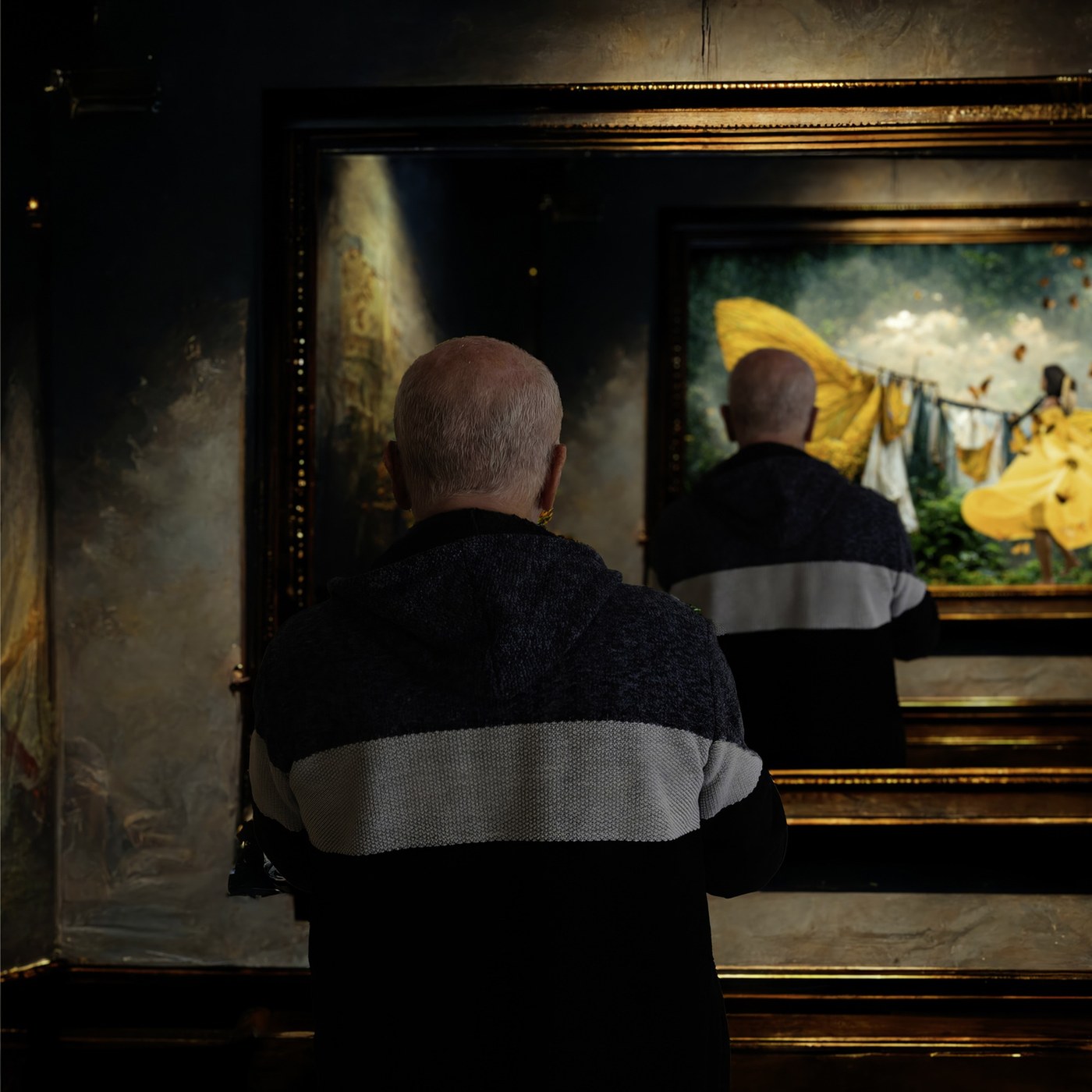
In the artwork titled "Reflections at the Museum," the protagonist is seen from behind, standing in front of a large framed painting. The figure appears to be contemplating the artwork, but the scene becomes more complex as the reflection of this figure in the painting seems to repeat endlessly within the frame. The protagonist, dressed in a black and gray jacket with his back to the viewer, stands quietly, fully immersed in the act of observing the painting.
Reflections at the Museum
Archival pigment print · 2024
1X Gallery — Published
Exhibited — Haifa
Archival prints from $800 · editions of 7, 3 and 1
◆ Signed Certificate of Authenticity in every package
Reading the work
One prominent theme in “Reflections at the Museum” is the exploration of self-reflection and identity. The endless reflections of the protagonist in the painting suggest a deeper meditation on the self, as if the act of observing the artwork becomes a mirror for self-examination. The museum setting, often associated with history and preservation, adds to this theme of introspection, as the figure contemplates not just the painting, but his place in relation to it, perhaps reflecting on personal experiences or memories. Another key theme is the juxtaposition of reality and imagination. The surreal painting within the frame, with its whimsical, fantasy-like imagery, contrasts sharply with the sober, realistic depiction of the museum and the figure. This contrast suggests a dialogue between the real and the imagined, the tangible and the abstract, creating a tension between what is seen and what is felt or experienced internally. The idea of infinite reflection also points to the theme of time and the passage of life. The endless repetition of the protagonist within the framed image may symbolize the cycles of thought, memory, or experience, suggesting that self-reflection is a continuous process, influenced by both the past and the present. The protagonist’s quiet stance hints at a contemplative state, where the boundaries between observer and the observed blur. The painting itself, with its playful depiction of the woman with butterfly wings, introduces the idea of transformation and freedom. Butterflies often symbolize change and liberation, perhaps suggesting that the protagonist is reflecting on his own transformation or journey through life. The museum setting provides a grounding context, while the surreal painting invites the viewer into a world of imagination, suggesting that self-reflection involves navigating both the real and the imagined.